

Health Awareness
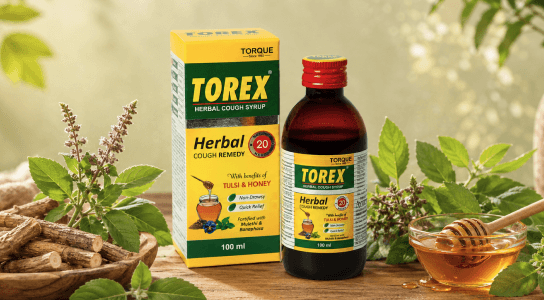
In Ayurveda, Tulsi is one of the most well-known herbs used to treat respiratory ailments. Tulsi is anti-inflammatory, antimicrobial, and antioxidant that acts as a decongestant to decrease the formation of mucus. It offers relief for bronchitis and asthma-induced coughs.
This herb acts as an immunity booster that helps the body to be resilient to pathogens. For a cough syrup for dry cough, Tulsi soothes the mucous membranes in the throat, making it an essential ingredient.
Known as one of the oldest and go-to cough remedies, Honey soothes the irritated throat tissues by reducing the urge to cough. Honey also has antibacterial and antioxidant properties that reduce inflammation in the throat. Besides being a natural cough suppressant, it is a natural preservative, too. Overall, honey enhances the absorption of other herbal ingredients.
Mulethi or Yashtimadhu has been one of the most extensively researched herbs used in Ayurvedic medicine for respiratory problems. As a mucolytic agent, it breaks down and loosens mucus for easy expulsion from the body. Mulethi possesses soothing and anti-inflammatory qualities that alleviate inflammation and irritation from the airways. Also, it acts as an antioxidant and protects against inflammatory oxidative damage.
Sunthi, or dried ginger, is a strong anti-inflammatory and antioxidant herb that reduces throat inflammation and loosens mucus. Since it has antiviral properties, it helps in fighting the underlying cough-causing infection. It also improves digestion and supports the entire healing process.
We all have seen our grandmothers mixing honey, ginger, and black pepper to treat a dry cough for centuries. Here, pepper acts as a respiratory stimulant, which has an active compound called piperine. This component has anti-inflammatory, antioxidant, and antimicrobial effects. When combined with Pippali (Long Pepper) and Sunthi, it forms the classical Ayurvedic formula known as Trikatu (excellent in respiratory care).
Amla is one of the richest natural sources of Vitamin C. In an Ayurvedic syrup formulation, this herb acts as a powerful antioxidant with immunomodulatory properties that decrease oxidative damage to the lungs. The anti-inflammatory characteristics of Indian Gooseberry provide relief to an inflamed throat and irritation of the respiratory tract.
Pudina, or peppermint, is included in herbal cough syrups for its menthol content. Menthol is known to activate cold receptors in the throat and nasal passages. This cooling sensation reduces throat irritation and nasal congestion. Additionally, Pudina acts as a mild expectorant with antimicrobial properties, making it valuable for respiratory health and combating infections.
One of the most powerful warming and expectorant herbs, Pippali stimulates the respiratory system and helps clear congested airways. Long pepper is commonly used in the treatment of chronic cough, bronchitis, and asthma. In Ayurveda, Pippali is known as a Rasayana herb, meaning it supports overall immunity and vitality.
Apart from these key herbs, ingredients like Tejpatra, Jatiphal, Vidanga, Banapsha, Shati, and others work together to provide effective cough relief. Together, they act as expectorants, antimicrobials, and immunity boosters while soothing an irritated and inflamed throat. One such herbal cough syrup that combines the power of these potent herbs is Torex Herbal Cough Syrup.
The primary reason a well-formulated herbal cough syrup is highly effective is because of the synergy between its ingredients. No single herb can address every respiratory concern, but a carefully selected combination of herbs helps fight infection, reduce mucus build-up, relieve chest congestion, and soothe throat irritation.
When around 20 herbs are combined into a single formulation, the product can target multiple respiratory issues simultaneously—something a single-herb remedy cannot achieve.
Now that you are aware of the unmatched benefits of a herbal cough syrup with 20 herbs, never go for a single-ingredient option. A blend of Tulsi, Mulethi, Honey, Pepper, and other herbs can provide you with the relief you have all been asking for.
Medical Disclaimer: Always consult a healthcare professional before using any new medicine, including herbal remedies. Never self-medicate or decide on the dosage.
Eyebrow: FAQs
Headline: Common Questions Answered
Subtext: Get clear answers in one place.
Common Questions Answered